
Située entre la place de la Bastille et la place des Vosges, l’emblématique brasserie parisienne Bofinger a su traverser les époques en conservant son âme dans un décor historique exceptionnel.
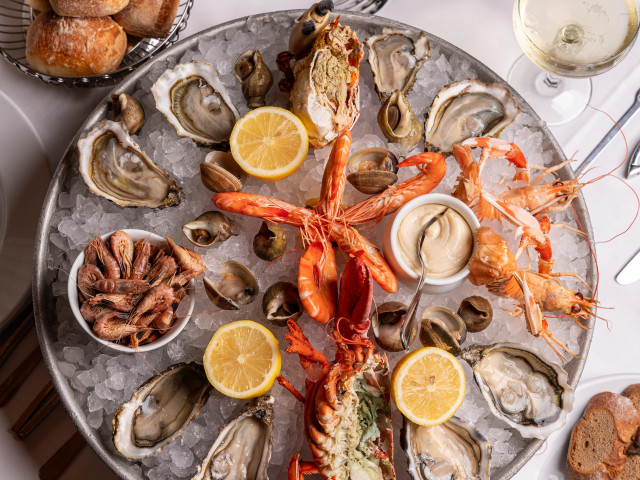
Dans cette institution connue comme l’une des plus belles brasseries de Paris, le chef concocte des spécialités alsaciennes qui font la renommée du lieu : le Kougloff façon pain perdu, le Soufflé au Grand Marnier, ou encore « la meilleure choucroute de Paris » cuisinée maison selon la tradition. Chez Bofinger, vous trouverez aussi un immense banc de fruits de mer, et les grands classiques de la brasserie aux spécialités françaises, des plats à l’image du lieu : simples, conviviaux et chaleureux.
Le restaurant est ouvert tard le soir pour les dîners après spectacle. Il est également ouvert le dimanche.
Vous pouvez également offrir un repas pour 2 personnes (entrée + plat + dessert + café + eau + vin) avec notre partenaire Wonderbox.
Conscients que notre alimentation a un impact direct sur notre santé, notre planète et nos communautés, nos chefs et équipes travaillent chaque jour pour essayer d’avoir le plus d’impact positif possible.
Alsacienne, Française Traditionnelle, Brasserie
BRASSERIE – FRUITS DE MER A EMPORTER
Accès Wifi, Ouvert le dimanche, Fermeture tardive, Ouvert les jours fériés, Menus enfants, Salle climatisée
Sunday, Eurocard/Mastercard, Espèces, Visa, American Express, Carte Bleue
Bastille ( ligne 1,5,8 ) Gare SNCF de Paris Gare de LYON
Parking Saint-Antoine Parking Opéra - Bastille Parking Ledru Rollin
12h00 - 15h00 18h30 - 00h00
12h00 - 15h30 18h30 - 00h00
12h00 - 00h00